Meme coin trading for beginners versus copy trading
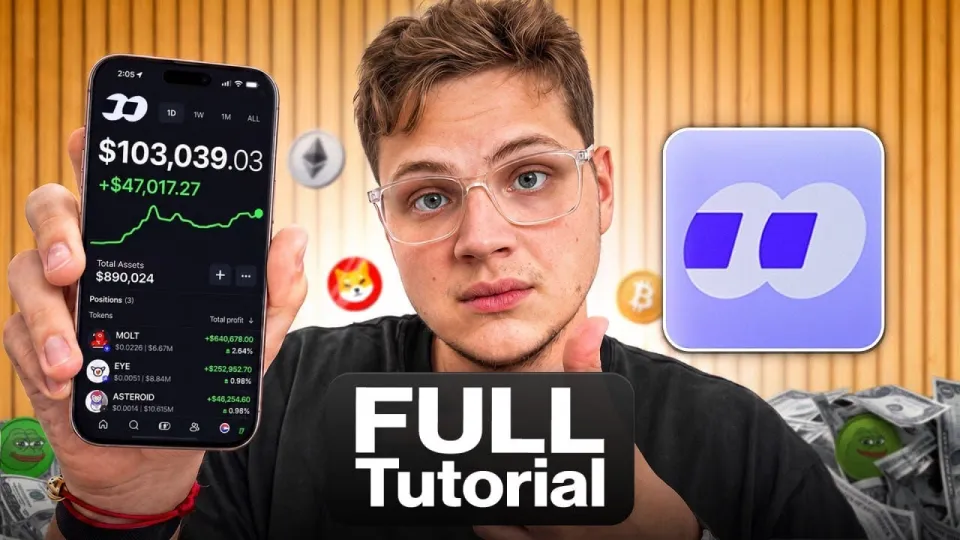
Video: How To Make Money Trading Memecoins (fomo app tutorial)
Want articles like this for your own video to promote it on YouTube and Google? Order them through the Telegram bot @sat_sit_bot. The bot writes and publishes the articles itself (with your YouTube video embedded) on popular topical websites (no ads). Your first 50 articles are free.
· based on the channel Orangie Web3
Key takeaways
- Memecoins are high-volatility tokens with no cash flow, so profit comes from timing and exit discipline, not from holding.
- Copy trading on meme coins usually fails because large wallets buy on a separate account before their main wallet, so followers enter at a worse price.
- The fomo platform bundles token discovery, charts and swaps in one interface; registration via https://fomo.family/r/orangie gives access to it.
- Risk per trade should be capped at 1–3% of the trading wallet, and the wallet itself should be separate from long-term holdings.
- Price alerts are the most requested missing feature among fomo users, so manual monitoring of entries and exits is still required.
Meme coin trading makes sense only as a short-term, high-risk activity with strict position sizing and a pre-planned exit; for most people the better choice is learning to trade a few launches manually rather than copy trading influencers, because copy trading on memecoins usually fills you after the wallets you follow have already moved the price. A practical starting point is a dedicated trading interface such as the fomo platform, which combines token discovery, charts and swaps in one place and keeps speculative funds away from your main wallet.
What a meme coin actually is and why the price moves
A meme coin is a token whose value rests on attention and community rather than revenue, collateral or protocol fees, which is why its price is driven by narrative, liquidity and the order book rather than fundamentals. On Solana, where most of these launches happen, a token can go from creation to a multi-million-dollar market cap within hours and lose most of it just as fast, because liquidity is thin and early holders control the supply.
That structure creates the core mechanic every trader has to respect: the people who bought at the bottom need new buyers to sell into. When you see a chart that already went vertical, you are not early, you are the exit liquidity. The realistic edge for a retail trader is speed of decision, small size and a defined invalidation point, not conviction about a meme.
Manual trading versus copy trading on meme coins
Manual trading means you find the token, read the chart and liquidity yourself and decide your entry and exit; copy trading means you mirror someone else's wallet automatically. The second option looks easier, but it carries a structural disadvantage that experienced traders exploit.
- A large trader can buy the token on a separate wallet first, then buy on the main wallet that followers track, letting the copy flow push the price up while the first position is already in profit.
- By the time the mirrored buy lands, the follower's fill is worse than the leader's, and the leader can sell into that demand.
- Automated mirroring also removes your ability to skip a bad setup, which is the single most valuable skill in this market.
Manual trading is slower and demands screen time, but it keeps the decision and the risk in your hands. For a beginner the practical middle ground is to follow a handful of wallets for idea generation, then execute and size the trade yourself.
A repeatable workflow for a meme coin trade
A meme coin trade should follow the same sequence every time so that emotion does not decide the size or the exit. The steps below work on any Solana trading interface, including the fomo app shown in the Orangie Web3 tutorial.
- Isolate the bankroll. Fund a separate hot wallet with money you can lose entirely; a drained wallet is a common story and it never touches savings.
- Screen the token. Check contract age, holder distribution, liquidity depth and whether top wallets hold a large share of supply. A token where a few addresses control most of the float is a sell-off waiting to happen.
- Set the risk per trade. One to three percent of the trading wallet per position is a workable ceiling; a 90-dollar wallet therefore risks two to three dollars per attempt.
- Define the exit before entry. Decide the target and the stop in advance, and accept that most meme trades end at the stop.
- Take profit in tranches. Selling half at the first strong move locks in a result and removes the pressure to guess the top.
- Log the trade. Entry, exit, reason and result — after twenty trades the log shows whether the strategy is real or just luck.
Where the fomo app fits and what it does not do
The fomo platform is a trading front end for meme coins that puts token feeds, charts and swap execution in one window, which shortens the path from spotting a launch to placing an order. Access is through a referral link, and the account is used purely for execution and monitoring rather than storage of long-term holdings.
Its practical limitation is alerts: users repeatedly ask for price notifications, and until those exist the trader has to watch positions manually or set them elsewhere. Treat any trading app as a tool for execution, not as a signal service — no interface tells you which launch will survive the week.
The questions traders ask most about meme coins
Most doubts around meme coin trading repeat the same few themes: whether the market is too late, how to start with a small balance, and how to recover after a loss.
- "Am I too late to copy this wallet?" Usually yes, if the wallet is public and already bought. Use tracked wallets for ideas, not for entries.
- "Can I start with under 100 dollars?" Yes, but the point of a small balance is to learn execution and exits, not to multiply it quickly; fees and failed trades eat a large share of tiny accounts.
- "What if my wallet gets drained?" Revoke token approvals, move remaining funds to a fresh wallet and never reuse seed phrases in browser extensions you do not trust.
- "Why does the price crash right after I buy?" Because thin liquidity means the buyers ahead of you were waiting to sell into exactly that demand.
The fact that these questions keep coming up is a signal in itself: the technical side of meme coin trading is simple, and the discipline side is what separates a funded wallet from a drained one.
Useful links
- fomo trading platform (registration via referral): https://fomo.family/r/orangie
- Orangie Web3 Discord community: https://discord.gg/memecoins
- Orangie on Instagram: https://www.instagram.com/orangieyt/
Bottom line
Meme coin trading rewards a manual, rule-based approach over copy trading, because mirrored buys arrive after the wallets you follow have already positioned themselves. Keep the speculative bankroll separate, cap risk at a few percent per trade, plan the exit before the entry and treat every interface, including fomo, as an execution tool rather than a source of conviction. The walkthrough on the Orangie Web3 channel is a useful starting point for the mechanics, and the platform itself is reachable through the fomo referral link if you want to test the workflow with a small balance first.
Questions & answers
Is copy trading meme coins profitable for beginners?
Rarely in its pure form. Large wallets often buy on a separate account before their tracked wallet, so followers fill at a worse price and become the exit liquidity. Copy trading can generate ideas, but sizing and execution should stay manual.
How much money do I need to start trading meme coins?
Any amount works technically, but a small balance under 100 dollars is best treated as tuition for learning execution, fees and exits. Risk no more than one to three percent of that wallet per trade and keep it separate from savings.
Does the fomo app send price alerts?
Price notifications are the most requested feature among its users and are not a reliable part of the current workflow. Plan to monitor positions manually or track levels in a separate tool until alerts are added.
What is the biggest risk with meme coins on Solana?
Thin liquidity combined with concentrated holder supply. A few wallets can sell into new demand and collapse the price within minutes, and hot wallets connected to trading apps are also a frequent target for drainers.
Source: How To Make Money Trading Memecoins (fomo app tutorial) · Markdown version